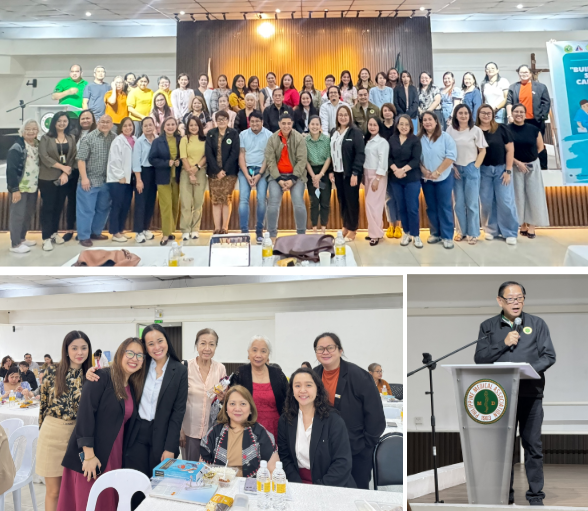

November 13, 2025, Philippine Medical Association (PMA) Auditorium, North Avenue, Quezon City, Philippines
In a historic convergence of national expertise, policy, and unified purpose, the Philippine Cancer Society (PCS) spearheaded a transformative collaboration that convened the nation's foremost oncology institutions, governmental leaders, and Local Government Units (LGUs). The event, "Building Capacity, Saving Lives: PSO, PCS, PSMO, DOH, QC Joint Efforts in Cancer Control," represented a decisive turning point in the Philippines' battle against cancer, shifting the national strategy from mere policy frameworks to concrete, measurable, and operational community-level action.
The Philippine Cancer Society served as the architect and anchor of this unprecedented unified effort. Leveraging its extensive epidemiological foundation, decades of operational experience, and unwavering patient-centered model, the PCS provided the essential blueprint for translating the ambitious goals of the National Integrated Cancer Control Act (NICCA) into tangible, life-saving programs accessible to communities across the archipelago.
This groundbreaking symposium successfully forged a unified front by bringing together five essential components of the national health system:
- Philippine Cancer Society (PCS): Provided the operational expertise, patient-centered models, and standardized implementation frameworks necessary for national scaling.
- Philippine Society of Oncologists (PSO) & Philippine Society of Medical Oncology (PSMO): Contributed clinical excellence, specialist perspectives, and an unwavering commitment to advancing treatment protocols and capacity-building.
- Department of Health (DOH): Led national policy direction, strategy, and public health oversight, emphasizing the critical partnership between national mandates and grassroots execution.
- Local Government Unit (LGU): Demonstrated exemplary local governance, showcasing best practices in translating national policy into effective, concrete patient support mechanisms at the community level.
Together, these institutions collaboratively developed a comprehensive strategy designed to effectively bridge the critical gap between high-level national cancer control policy and its robust, effective community-level implementation.
The day’s proceedings delivered four transformative, action-oriented achievements that are poised to reshape cancer care delivery nationwide:
- Formal Launch of the ACT NOW Framework: The Philippine Cancer Society formally articulated the ACT NOW: Access to Cancer Treatment - 360 Degrees Full Circle model. This framework established a systematic, seamless pathway that is set to become the national standard for comprehensive cancer care, integrating: Prevention and Education → Early Screening → Patient Navigation → Timely Access to Definitive Treatment →Community Rehabilitation → Palliative Care. This holistic approach ensures focus on both survival outcomes and dignified quality of life.
- Soft Launch of the Operational Blueprint: The introduction of the ACT NOW Program Startup/Operations Manual provided an immediate, practical tool. This standardized, replicable guide equips Local Government Units and health partners with the necessary standards, competencies, and operational protocols for establishing and sustaining effective, high-quality cancer screening and patient navigation services nationwide. This manual distills the PCS’s decades of experience into an actionable framework.
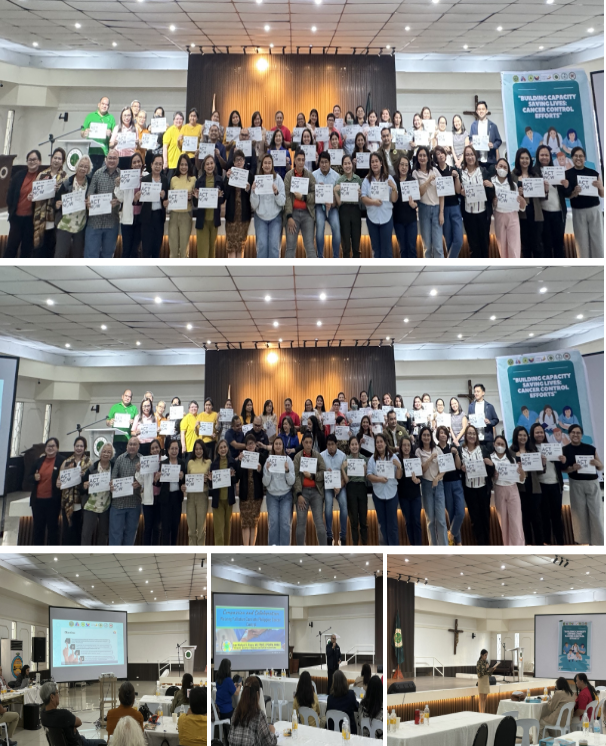
- Mobilization of LGU Commitment: The powerful "ACT NOW: Save Lives" Call to Action culminated in all participating Local Government Units formally committing to the initiative. This historic public declaration—visually captured in the pictorial sessions where LGU representatives stood alongside PCS leadership, endorsing the campaign—represented a profound exercise of commitment to integrating the national cancer control strategy into their local health programs.
- Immediate Translation to Community Action: The concluding LGUs Needs Assessment & Resource Mapping Workshop marked the critical transition from theory to practice. Facilitated by PSO and PCS experts, this interactive session enabled LGUs to assess local needs, map existing resources, and develop concrete, localized implementation plans, ensuring the immediate operationalization of the national framework within diverse community contexts.
The symposium opened with a powerful demonstration of institutional unity, featuring Welcoming Remarks from key leaders. Asec. Gloria J. Balboa, MD (DOH), led the charge for public health, emphasizing the DOH’s commitment to implementing comprehensive cancer control. Dr. Hector M. Santos Jr. (PMA) underscored the host institution's role in fostering medical collaboration. In a powerful display of solidarity, Dr. Gloria R. Cristal Luna (PCS Trustee, representing PSMO) reinforced the unified front of the oncology community in advancing treatment excellence.
Understanding the Challenge and the Solution
This pivotal segment established the evidence-based urgency for action:
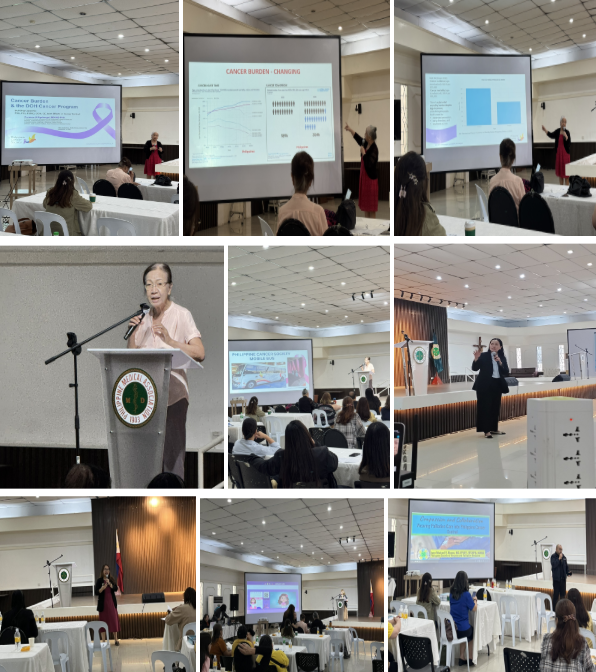
- The National Cancer Burden: Dr. Corazon A. Ngelangel (President, PCS) delivered a vital, data-driven analysis of Philippine cancer epidemiology, using PCS’s extensive research and registry data to reinforce the urgent need to address late-stage diagnoses. She outlined the imperative for concerted, multi-sectoral application of primary, secondary, and tertiary prevention strategies.
- Local Policy Translation: Dr. Herdee Gloriane C. Luna (Oncology Manager, PCS), presenting for Councilor Alfred Vargas, expertly highlighted the pioneering Quezon City Cancer Control Ordinance, showcasing how progressive local legislation can successfully translate national mandates into concrete patient support mechanisms and serving as a model for other LGUs.
- The Comprehensive Care Model: Dr. Herdee Gloriane C. Luna followed with a transformative, detailed presentation unveiling the ACT NOW: Access to Cancer Treatment - 360 Degrees Full Circle framework, demonstrating how successful cancer control requires a systematic, seamless pathway that leaves no patient behind.
Practical Strategies and Future Mapping
The afternoon focused intensely on translating strategic vision into operational mechanics:
- The Human Infrastructure and Data Foundation: Dr. Maricar R. Sabeniano (PCS Oncology Manager) detailed the function of the PCS-pioneered Patient Navigation Program (PNaP), a vital service for overcoming socio-economic and logistical barriers. She also emphasized the indispensable role of the Cancer Registry in evidence-based policy, resource allocation, and measuring intervention efficacy—a non-negotiable prerequisite under the NICCA.
- Local Excellence: Dr. Karen Gemma A. See (Quezon City Health Department) showcased Quezon City’s successful implementation, providing concrete, inspiring examples of how LGUs can effectively operationalize national frameworks on the ground.
- Implementation Blueprint Launch: Dr. Herdee Gloriane C. Luna introduced the ACT NOW Program Startup/Operations Manual, the practical implementation blueprint that empowers communities to deliver world-class cancer care by standardizing operational protocols.
- Digital Innovation: Mr. Carlos Antonio De Castro (Anton) (Co-Founder, MEDCHECK) introduced the groundbreaking ACT NOW Portal, a digital platform designed to leverage health technology to democratize access to cancer education and early risk assessment, particularly in underserved communities.
- Completing the Circle of Care: The session concluded with a profound focus on holistic care. Dr. Susano B. Tanael Jr. (PSO, PSMO) explored Supportive Oncology, integrating scientific excellence with pastoral-spiritual accompaniment, viewing oncology as an integrated ministry of science and human dignity. Dr. June Michael V. Razon (Vice President, Philippine Society of Hospice and Palliative Medicine) addressed the practical implementation of dignified, compassionate hospice and palliative medicine as an integral component of comprehensive control.
- Resource and Workforce Mobilization: Presentations by Ms. Bernadette S. Audije (TESDA) detailed training programs for patient navigators and supportive care providers to address the human resource gap. Ms. Marjorie Ethel G. Nuesca (DSWD) explained the Department's crucial role in providing financial navigation and support, addressing the economic barriers to treatment access.
The commitment to action was continuously reinforced, culminating in the LGUs Needs Assessment & Resource Mapping Workshop, where strategic discussions were immediately transformed into concrete, community-level resource plans. This session ensured that the ACT NOW model was translated into localized, actionable strategies.
In her Closing Remarks, Dr. Frances Lily Lantin-Peñano (President, Philippine Radiation Oncology Society; PSO) celebrated the historic collaboration, reinforcing the commitment of all participating institutions to sustain the momentum.
Over 55 delegates and Metro Manila CHD cancer control coordinators attended this event. This landmark event achieved the critical goal of seamless integration. The ACT NOW initiative now provides a clear, practical pathway—supported by the Operations Manual, expert facilitators, and committed LGUs—for every community to deliver comprehensive cancer care. This moment represents the definitive shift by the Philippines from accepting cancer as an inevitable tragedy to fighting it as a preventable and treatable disease.