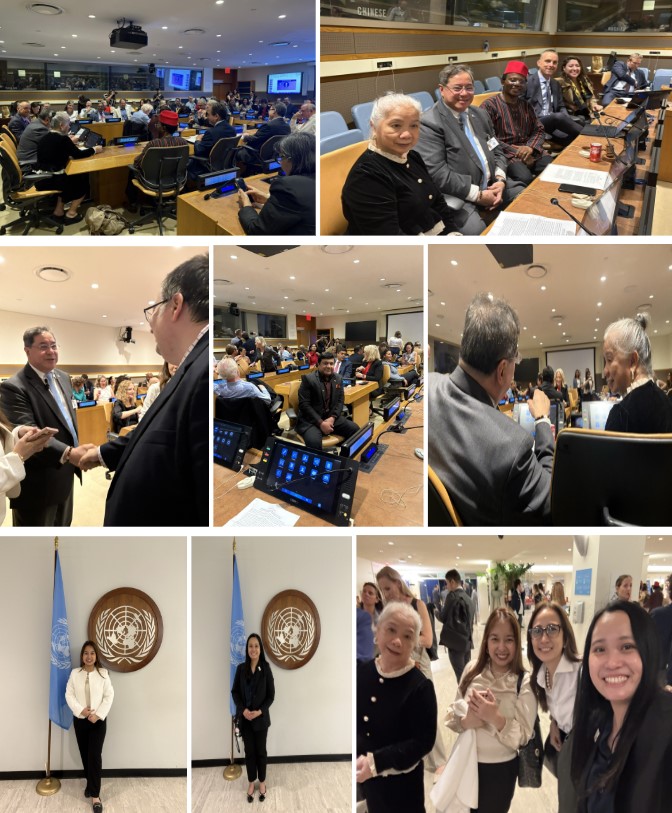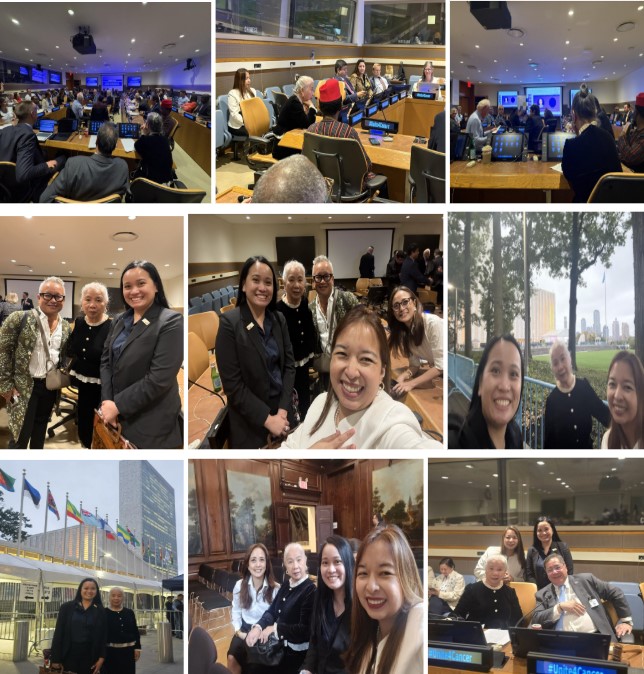

On the sidelines of the 2025 UN General Assembly High-Level Week, a powerful sequence of high-level events convened in UN HQ-New York under a unifying banner: “The Last Mile: Bridging the Cancer & NCD Innovation Gap with AI, Early Detection, and Equitable Access”, on 24 September 2025 Conference Room 5, hosted by: International Cancer Patient Coalition (ICPC) in collaboration with the Permanent Mission of the Republic of the Philippines to the United Nations.
Three interconnected forums (24-25 September - at the Italian Mission House, the UN HQ, and the Swiss Mission House) - were designed to generate tangible political momentum and practical frameworks for digital pathology, AI-enabled screening, and equitable cancer innovation. At their core is a focus on public-private partnerships (PPPs) — seen not only as vehicles for innovation but as critical instruments for real-world delivery, health system integration, and sustainability. Together, these gatherings built toward the adoption of a declaration of political commitment, advancing implementation of precision and digital technologies in early detection and treatment, with a specific focus on breast, lung, liver, rare cancers, and co-morbidities.
The Philippine Delegation, led by the Permanent Mission to the UN and with the Philippine Cancer Society (PCS) as a key civil society partner, took a central leadership role during the 4th UN High-Level Meeting (HLM4) on the prevention and control of Non-Communicable Diseases (NCDs) and the promotion of Mental Health and Well-being. This decennial UN gathering aimed to produce a new, ambitious Political Declaration to accelerate global NCD prevention and control from 2025 onwards, addressing the fact that NCDs, including cancer, now tragically account for 75% of non-pandemic-related deaths worldwide. The Philippines' engagement was crucial in ensuring a focus on equitable delivery of care in developing nations.
The Philippine Mission co-hosted the pivotal "Last Mile" policy dialogue, titled: The Last Mile: Bridging the Cancer & NCD Innovation Gap with AI, Early Detection, and Equitable Access. This significant session, held on September 24, 2025, from 15:00 to 18:00 EST at the United Nations Headquarters, Conference Room 5, was the central component in a three-part "Last Mile" policy series. The series followed a deliberate arc: the first event (Italy) focused on Investment and innovation pathways; the UN session focused on the global Framework for action; and the final event (Switzerland) focused on hands-on Implementation and rare diseases. The UN dialogue’s urgent purpose was to align political leaders, health stakeholders, and civil society on a shared, concrete framework for action, specifically aimed at closing the persistent gap between cutting-edge medical innovation and its practical implementation in low- and middle-income countries (LMICs).
The Philippine Cancer Society (PCS) reinforced the delegation’s impact, bringing nearly seven decades of experience in local cancer control to the global stage. Dr. Corazon Ngelangel, President of the PCS, delivered a critical intervention at the UN event, ensuring that the unique perspectives, real-world challenges, and proven grassroots successes of Filipino patients and advocates were integrated into the global policy conversation. She was actively supported by delegates Dr. Herdee Gloriane C. Luna and Dr. Maricar Sabeniano, both of whom serve as Executive Active Team-Oncology Manager. With PCS was Ms Kara Magsanoc-Alikpala of ICanServe Philippines, who moderated the UN HQ event. The dedication of the Philippine government to implementation was highlighted by the participation of the Secretary of Health, Dr. Teodoro Javier Herbosa. His involvement underscored the Philippines' commitment to practical, measurable execution of global health policy.
Dr. Ngelangel, together with Dr. Teodoro Javier Herbosa (Secretary of Health-Philippines), Karmen Joller (Minister of Social Affairs of Estonia), Ruggero De Maria (Board Member & Treasurer, ICPC & President, Alleanza Controil Cancro), and Denis Horgan (Secretary General, ICPC) set the scene. This session explored how AI, digital health, and organized screening can transform early detection across cancer and other NCDs. It focused on equity, ethics, and health system readiness, drawing lessons from global and regional initiatives. While cancer provides an urgent case study, the approaches discussed apply equally to diabetes, cardiovascular disease, and other NCDs.
Dr. Ngelangel provided a briefer on “BRIDGING the CANCER CARE GAP in ASIA with AI, EARLY DETECTION, and EQUITABLE ACCESS”, as follows:
Asia’s cancer care landscape is marked by immense opportunity—and urgent need. Rapid population growth, aging demographics, and persistent disparities mean millions face significant barriers to early detection, high-quality treatment, and follow-up. AI-driven innovation, combined with strategic equity efforts, can help close these gaps.
In particular, the Philippines faces an increasing incidence of cancer, with public health systems stretched by both an aging population and growing lifestyle risk factors (Rising Cancer Burden). Most advanced cancer care centers and specialists are concentrated in cities like Metro Manila and Cebu. Rural and provincial communities often have limited or no local access to oncologists or advanced diagnostics, leading to late-stage diagnoses and poorer survival rates (Regional Disparities). The cost of cancer care remains a significant challenge. Despite government insurance (PhilHealth) expanding coverage, many patients still pay out-of-pocket for diagnostics, treatment, and supportive care. This “financial toxicity” forces families into hardship and drives treatment abandonment (Financial Barriers). The Philippines’ decentralized, archipelagic geography compounds inequities in access and quality of care across thousands of islands (Fragmented System). Nationwide systematic cancer screening programs are lacking, with opportunistic screening the norm. This means many patients are diagnosed too late – needing screening innovations. Fortunately, the Philippines now has the National Integrated Cancer Control Act of 2019, which started implementation after the COVID-19 pandemic – NICCA could propel changes accordingly.
1. AI as a Catalyst for Cancer Care Transformation
- Enhance Diagnostic Accuracy: Artificial intelligence improves cancer detection by reading imaging scans (X-rays, mammograms, CTs) with exceptional speed and accuracy, sometimes outperforming human specialists. For example, AI tools are being trialed across ASEAN for breast, cervical, colon, and lung cancer screening—with studies in Singapore, Malaysia, Vietnam, Thailand, and Indonesia showing improved identification of early-stage cancers.
- Predictive Analytics & Personalized Medicine: By analyzing vast and diverse patient data, AI helps forecast cancer risk and recommends personalized treatment options—essential in resource-limited settings.
- Remote Monitoring & Telemedicine: AI- powered platforms extend care to remote and underserved regions, supporting continuous monitoring, virtual consultations, and streamlined referrals, thus reducing travel and wait times for patients.
2. Early Detection Powered by AI in the Asian Contexts
- Screening Innovations in ASEAN: Many Asian countries still rely on opportunistic rather than organized cancer screening, leading to late-stage diagnoses. AI’s integration into screening programs increases accuracy, lowers cost, and speeds up triage. For example, AI-assisted chest X-rays in the Philippines and breast cancer predictive models in Singapore are helping identify high-risk patients who would otherwise remain undetected until symptoms arise.
- Improved Screening Uptake: Community and multimedia interventions powered by technology—such as in Hong Kong’s IMPACT project—have shown up to 42% increase in cervical cancer screening rates among South Asian ethnic minorities. These approaches can be scaled across the region.
- The Role of AI & Early Detection – Philippines:
Screening Innovations: Nationwide, systematic cancer screening programs are lacking, with opportunistic screening the norm. This means many patients are diagnosed too late.
AI-Powered Diagnostics: Recent pilots by the Philippine Asian Hospital & Medical Center have integrated AI-assisted CXRs for lung cancer (considering the Philippines is endemic for pulmonary tuberculosis) – a low-cost innovation that triages high-risk individuals with high-risk CXR findings to the traditional lung cancer screen modality LDCT, at just a fraction of traditional costs (as low as P50 per AI-CXR screen). These models also help distinguish between cancer and common conditions like tuberculosis, a known diagnostic challenge in the country.
Expanding Insurance Coverage: PhilHealth is now beginning to reimburse for outpatient cancer screening—including procedures for breast, liver, lung, and colorectal cancers – procedures which can be assisted by AI (AI-UTS/ MMG, AI-UTS, AI-CXR/ LDCT, AI-Endoscopies, respectively). This expands access to critical early detection tools, especially for low-income Filipinos.
Genomic & Pathology Advances: Globally, AI models trained on imaging and pathology slides can augment Philippine labs by predicting genetic mutations—offering personalized medicine opportunities even in understaffed facilities.
3. Ensuring Equitable Access with Technology and Policy:
Inclusive AI Development: It is essential that AI models are trained on data that reflect Asian populations' genetics, disease patterns, and cultural nuances. Without such representativeness, algorithms risk perpetuating existing health inequities. Culturally sensitive AI improves patient engagement and treatment adherence.
Expanding Care Beyond Urban Centers: Nations such as Thailand (“Cancer Anywhere” project) and the Philippines (“ACT Now” program) are/ will pilot models where AI and digital platforms route patients to regional cancer centers, supporting those in rural and marginalized communities. AI-powered virtual triage, scheduling, and navigation platforms can help direct patients to the right care, bridging the urban-rural divide and mitigating “lost to follow-up.”
Training & Capacity Building: AI can support overburdened primary care and community health workers in countries like the Philippines by providing clinical decision support and educational resources, reducing dependence on scarce specialists.
Policy, Financial, and Systematic Reform: Out-of-pocket costs and fragmented health systems remain major hurdles. Insurance expansions (e.g., PhilHealth’s eventual coverage of AI screening in the Philippines) and universal coverage initiatives are critical to sustain affordable access for all. Sustainable progress requires increased funding for cancer care, improved medicine procurement, and policies to establish regional cancer hubs connected by telemedicine and mobile clinics.
4. Challenges & Path Forward:
Addressing Bias & Data Diversity: Ensuring equity means developing AI with diverse datasets, strong privacy protections, and continuous engagement with local patient groups, policymakers, and health workers.
Collaborative Action: Integrating AI into national cancer strategies requires partnership—across government agencies, tech innovators, healthcare professionals, NGOs, and most importantly, patient voices.
AI Impact Assessments: Rigorous, ongoing AI impact assessments will power a new cycle of feedback and improvement—helping policymakers craft cancer care reforms that are notably evidence-based, adaptive, and equity-focused. By embedding robust data gathering and evaluation into the core of cancer policy design, the Philippines can accelerate progress to ensure that the promise of AI translates into real, measurable gains for all, regardless of geography, income, or background.
Asia is advancing in harnessing AI for early detection and equitable cancer care --- yet success requires sustained commitment to inclusive innovation, strategic investment, and collaboration. The goal: Every person can access life-saving screening and treatment, regardless of geography, income, and background.
A key outcome of the UN dialogue was the launch of the ICPC TARGET: Consensus Framework. This framework is a simple, five-year delivery playbook designed to complement the UN’s Political Declaration on NCDs (which was adopted the following day, September 25, 2025). It explicitly recognizes the burden of multimorbidity, including cancer control, brain health and neuro-psycho-oncology, and translates high-level political intent into a small set of actionable steps that countries can adapt without creating new bureaucracies.
The acronym TARGET stands for: Timely Access & Result-Guided (biomarker-enabled) Therapy. The framework focuses on achieving measurable delivery goals with specific targets by Year 5:
- Access: Ensuring people can get the right diagnostic tests close to home or via scheduled sample pick-up. The framework calls for the steady adoption of proven innovations like advanced molecular tests and risk-stratified protocols into screening programs, with an equity focus to ensure hard-to-reach groups benefit first. Target (by Year 5): ≤2-hour access nationwide.
- Speed: Accelerating the transition from diagnosis to treatment through clear, nationwide turnaround time (TAT) standards. The goal is a recommended benchmark of less than 14 days from sample to result, and an ambitious ≈30-day median from the initial diagnostic test to the start of treatment by Year 5.
- Match & Protection: Using accurate, biomarker-enabled diagnostics to precisely match patients with the smartest, most effective treatments. This drives for a therapy-match for eligible patients by Year 5. Critically, this principle also mandates comprehensive financial protection for patients and their families, with the goal of achieving 0% catastrophic Out-of-Pocket (OOP) expenditure for covered services by Year 5.
The prominent involvement and leadership of the Philippine Delegation—from co-hosting the policy framework meeting at the UN to having its Health Secretary drive the subsequent implementation discussion—cemented the nation’s role as a leading advocate for equitable, patient-centered precision care delivery in the global health community. It emphasized that the Philippines has put forward its investment in cancer control through its National Integrated Cancer Control Act of 2019 (not many countries have a cancer control law).