
The Role of Patient Navigation in Bridging Gaps in Care
A central theme of the conference was the implementation of patient navigation as a critical strategy for improving care delivery. Dr. Herdee Gloriane C. Luna, representing the Philippine Cancer Society, presented on the tangible benefits of patient navigation programs. These programs are designed to guide patients through the complex healthcare system, helping to eliminate barriers and ensure they receive timely and effective care.
Dr. Luna's presentation highlighted that patient navigators, who can be clinical professionals, community health workers, or trained volunteers, play a pivotal role in providing holistic support. The Philippine model demonstrated how such a program can achieve remarkable outcomes, including a high response rate on screening initiatives and improved patient support, thereby reinforcing the urgency of adopting similar models throughout the region. In addition, the innovative ACT NOW PRIME CARE in breast cancer utilizes digital education (breast health, breast cancer, self breast exam) integrated with a digital risk assessment tool, mobile bus clinics, patient navigation, and immediate referral to Department of Health centers with medicine access program for treatment completion and survivorship.
Innovative Funding Solutions for Financial Accessibility
Recognizing that financial barriers are a major impediment to care, the meeting also explored alternative funding solutions. The discussions, informed by Dr. Luna's expertise, underscored that mainstream funding is often insufficient to cover treatment costs, forcing many patients to rely on out-of-pocket payments.
The presented solutions included redirecting patients toward supplementary financial aid from charitable foundations, copayment cards, and manufacturer programs. These models provide crucial assistance that can help alleviate the financial burden on patients and their families, thereby enabling them to access life-saving treatments they might otherwise forgo.
A Unified Commitment to Equitable Access
The APPISx SEA meeting served as a powerful platform for a unified call to action. Despite advancements in awareness and screening, breast cancer continues to claim thousands of lives annually in Southeast Asia, with particularly high mortality rates observed in the Philippines, Malaysia, Singapore, Vietnam, and Indonesia.
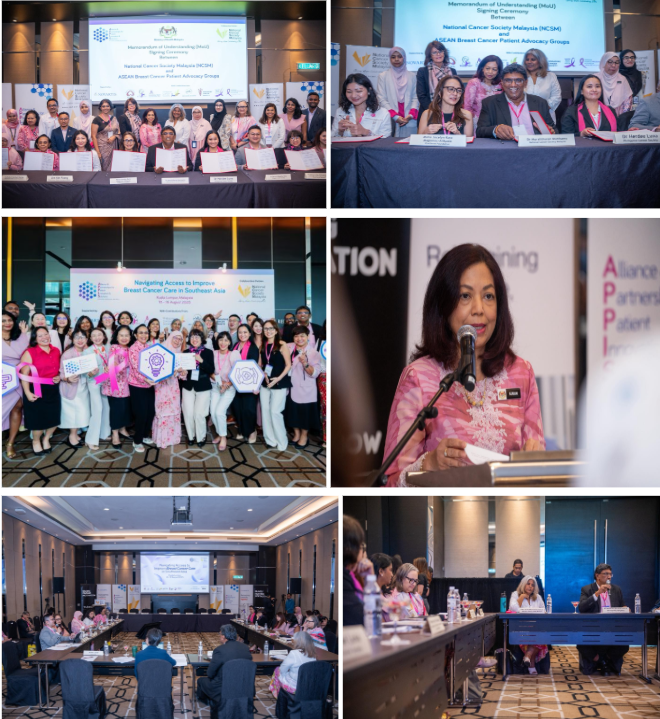
Leaders such as Suriani Ahmad from the Ministry of Health (MOH) and Dr. Murallitharan Munisamy of NCSM underscored the regional significance of this collaboration. The signing of a Memorandum of Understanding symbolized the collective commitment of all participating leaders to work together to improve the standard of breast cancer care. Findings and insights from the event will be compiled into a white paper, which will serve as a resource for future efforts to address inequities and drive meaningful change in patient care across the region.