
Meeting with Hon. Kristine Matias July 18, 2025
Councilor, District 6, Quezon City
Chairperson, Committee on General Services and Patrimonial and Proprietary Property
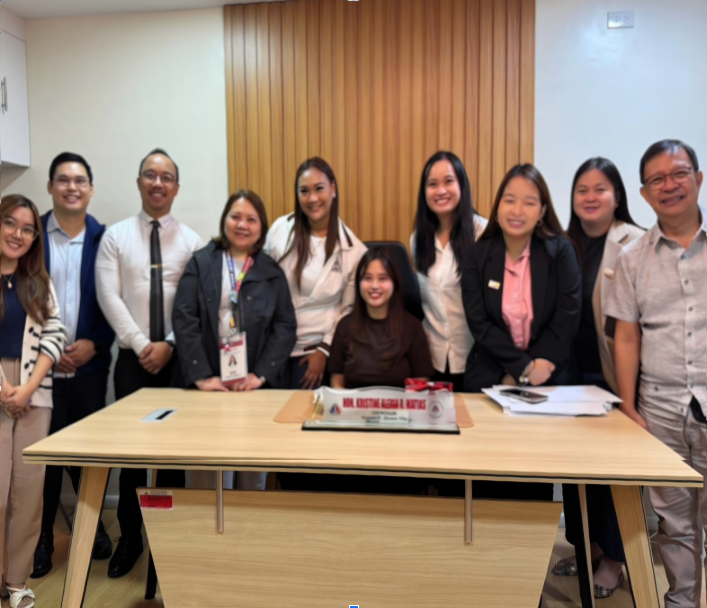
The Philippine Cancer Society (PCS) successfully had an introductory meeting with key local government officials last July 18, 2025, to present the organization's mission, programs, and collaborative opportunities in the fight against cancer. This formal presentation marked an important milestone in strengthening partnerships between PCS and the Quezon City government. The meeting was attended by government officials, including Hon. Kristine Matias, Councilor for District 6 and Chairperson of the Committee on Health and Sanitation, Hon. Charm M. Ferrer, Councilor, and Dr. Karen Gemma See, Cancer Control Coordinator. Representing the Philippine Cancer Society were Dr. Herdee Gloriane C. Luna, who served as the presenter and Medical Oncologist, Jennifer Guinto, Dr. Maricar Sabeniano, Atty. Allan Chester Nadate as legal counsel, and Romeo Marcaida, all active members of the organization.
The Philippine Cancer Society stands as a cornerstone institution in the Philippines' cancer control landscape, having been established on December 22, 1956, as a private non-stock, non-profit corporation dedicated to comprehensive cancer prevention, control, and patient support nationwide. The organization operates under the mission "to advance knowledge about cancer, combat the spread of the disease, and bring relief to those afflicted with cancer," with a vision of "a country well prepared to meet the cancer challenge and a citizenry made fully aware of the threats of the disease." This nearly seven-decade commitment to cancer control has positioned PCS as a leading authority in comprehensive cancer care and prevention throughout the Philippines.
Dr. Herdee Gloriane C. Luna presented PCS's multi-faceted approach to cancer control, demonstrating the organization's commitment to addressing cancer across the entire care continuum. The comprehensive cancer control programs encompass prevention initiatives, including cancer awareness campaigns, vaccination drives, the innovative "Yosi Kadiri" anti-smoking campaign, and community-building "Relay for Life" fundraising events. The organization's screening and early detection efforts feature mobile cancer screening clinics for breast, cervical, and prostate cancer, the "Act Now Prime Care Program," and digital health technology integration through online platforms for health education and screening. Treatment support and management services include medical assistance funds providing financial support for cancer patients, comprehensive patient navigation services for care coordination, and healthcare professional training programs for capacity building among medical providers.
The organization's commitment to data collection and research is demonstrated through their operation of community cancer registries for local-level cancer surveillance, hospital-based cancer registries for institutional data collection, and population-based cancer registries for regional epidemiological monitoring. Additionally, PCS maintains robust education and information dissemination programs, including health professional training programs for continuing medical education, lay training initiatives for community health worker development, and public awareness lectures for educational outreach to diverse populations.
The flagship "ACT NOW" (Access to Cancer Treatment Now) program represents PCS's innovative approach to primary care breast cancer prevention and control, having been successfully piloted in Barangay Commonwealth, Quezon City. This groundbreaking initiative demonstrates how digital technology and community engagement can revolutionize cancer care delivery through its comprehensive digital health platform featuring an online self-registration and education portal at actnow.philcancer.org.ph/patient, comprehensive breast health information resources, and user-friendly community access to cancer screening services. The program incorporates an advanced risk assessment and triage system utilizing analytics for identifying high-risk individuals, systematic patient prioritization approaches, and evidence-based screening protocols.
The ACT NOW program's mobile screening services bring on-site ultrasound screening capabilities directly to communities, eliminating geographical barriers to screening through community-based healthcare delivery. An integrated referral network ensures seamless connection to hospitals with medical access programs, supported by specialized cancer navigator assistance and coordinated care pathways. Patient navigation and monitoring services feature dedicated cancer navigators for comprehensive patient guidance, ensuring continuity of care across the healthcare system through comprehensive follow-up and monitoring protocols.
The program has demonstrated significant clinical impact through early detection and timely intervention, resulting in reduced cancer mortality and morbidity rates, improved patient outcomes and survival rates, and faster screening and diagnostic processes. Economic benefits include reduced healthcare costs and financial burden, implementation of cost-effective community-based screening models, and efficient resource utilization. System strengthening outcomes feature enhanced communication and collaboration among healthcare providers, strengthened referral pathways, and improved healthcare accessibility across diverse populations.
Community engagement through the Barangay ACT NOW Ambassadors Program creates a network of community health advocates promoting cancer awareness, providing patient navigation assistance at the grassroots level, developing family and community support networks, and establishing local leadership in cancer prevention initiatives. Policy advocacy and support efforts align with the National Integrated Cancer Control Act (NICCA), which provides a legislative framework supporting comprehensive cancer control, national coordination of cancer prevention and treatment efforts, and resource allocation for cancer programs. The Quezon City Integrated Cancer Control Ordinance (QCICCO) demonstrates local government commitment to cancer control through strengthened cancer registry systems, enhanced patient navigation services, and improved accessibility to cancer treatment.
Innovation in cancer diagnosis is exemplified through PCS's integration of artificial intelligence technology, specifically the qXR for Lung Nodule Detection system, which utilizes AI-based chest X-ray analysis technology and computer-aided detection software for identifying suspected pulmonary nodules. This innovative diagnostic tool enhances efficiency in high-volume screening settings while improving accuracy in early lung cancer detection, representing PCS's commitment to leveraging cutting-edge technology to improve cancer detection and patient outcomes.
Future initiatives include strategic development programs such as the City Cancer Challenge, a comprehensive urban cancer control initiative featuring multi-stakeholder collaboration frameworks and sustainable cancer care delivery models. The Digital eCancer Screen Expansion plans for multi-site implementation across various locations with a comprehensive cancer screening portfolio including lung cancer screening, colorectal cancer detection, cervical cancer prevention, prostate cancer screening, testicular cancer awareness, and retinal cancer screening. The success of the ACT NOW program in Barangay Commonwealth provides a proven model for replication across other communities in Quezon City and nationwide, with the program's digital infrastructure and community engagement strategies offering scalable solutions for addressing cancer control challenges across diverse populations.
The meeting highlighted significant collaboration opportunities between PCS and the Quezon City government, particularly in policy integration through alignment with QCICCO implementation, support for cancer registry strengthening, and enhancement of patient navigation systems. Resource sharing opportunities include utilization of government healthcare facilities, community health worker integration, and public-private partnership development. Program expansion possibilities encompass scaling of the ACT NOW program across multiple barangays, integration with existing city health programs, and comprehensive cancer control network development throughout the city.
The Philippine Cancer Society's presentation to Hon. Kristine Matias and fellow government officials successfully demonstrated the organization's comprehensive approach to cancer control and its significant potential for meaningful collaboration with local governments. With nearly seven decades of experience in cancer prevention, control, and patient support, PCS stands ready to partner with the Quezon City government in creating innovative, sustainable, and effective cancer control programs that can serve as models for nationwide implementation. The ACT NOW program's proven success in Barangay Commonwealth provides a concrete foundation for expanded collaboration, while PCS's comprehensive portfolio of services offers multiple avenues for partnership development. Through continued collaboration between PCS and the Quezon City government, the vision of "a country well prepared to meet the cancer challenge" can be realized at the local level, contributing to improved outcomes for cancer patients and their families throughout the community. This meeting marks the beginning of a promising partnership that will strengthen cancer control efforts in Quezon City and serve as a catalyst for the broader implementation of comprehensive cancer control strategies across the Philippines.
 |
 |