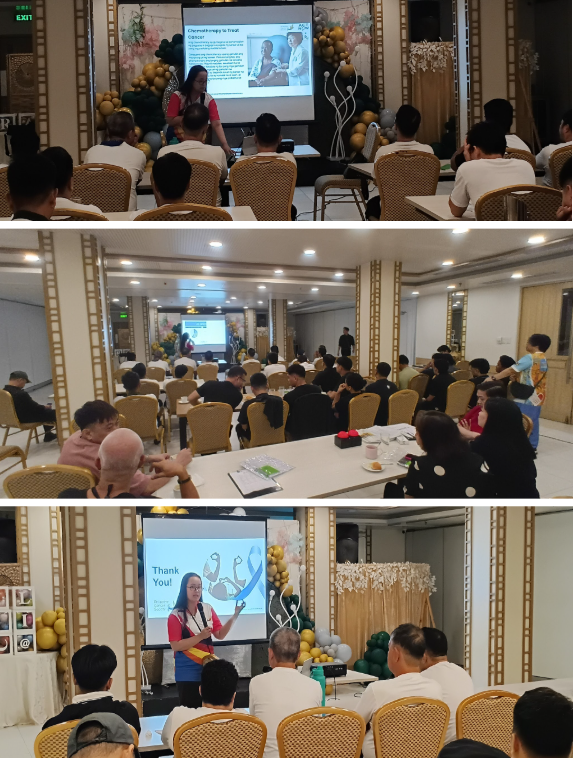

MANILA, Philippines (May 19, 2026) — The Philippine Cancer Society (PCS) held a medical education seminar focusing on Lung Cancer and Prostate Cancer yesterday, May 18, 2026, at The Aristocrat Restaurant on Roxas Boulevard. The event targeted community health literacy regarding early detection, risk factors, and current management strategies for both malignancies.
Event Highlights and PCS Leadership
The seminar was led by Dr. Herdee Gloriane Luna, Medical Oncologist and the Executive Action Team-Oncology Manager of the Philippine Cancer Society.
Dr. Luna presented epidemiological data outlining the disease burden in the Philippines, noting that lung cancer remains a leading cause of cancer-related mortality nationwide and holds the highest incidence rate among Filipino men. She also addressed the rising prevalence of prostate cancer, which ranks as the third most common cancer among the male population locally. Dr. Luna emphasized the clinical importance of established screening protocols, structured patient navigation pathways, and early medical intervention to improve patient outcomes.
Clinical Overview of the Lecture
The educational sessions covered the pathology, risk reduction, and screening guidelines for both cancer types:
1. Lung Cancer
- Pathology: Characterized by abnormal cell growth in lung tissues, often progressing asymptomatically in its early stages. The two primary classifications discussed were Non-Small Cell Lung Cancer (NSCLC) and Small Cell Lung Cancer (SCLC).
- Risk Factors: Tobacco smoking accounts for approximately 80% to 90% of cases. Secondary risks include exposure to secondhand smoke, environmental radon, and occupational carcinogens like asbestos.
- Screening: Annual Low-Dose CT (LDCT) scans are recommended for high-risk individuals, specifically adults aged 50–80 with a significant smoking history.
2. Prostate Cancer
- Pathology: A malignancy originating in the prostate gland, primarily affecting men over the age of 50, with the highest incidence seen in individuals aged 65 and older.
- Risk Factors: Primary non-modifiable risk factors include advanced age, ethnicity, and a family history of the disease.
- Screening: Routine evaluation relies on a combination of the Prostate-Specific Antigen (PSA) blood test and a Digital Rectal Exam (DRE).
Preventative Recommendations
The Philippine Cancer Society concluded the lecture with practical risk-reduction guidelines:
- Complete avoidance of active and passive smoking.
- Dietary modifications, including increased intake of whole grains, fruits, and vegetables, alongside limited consumption of red and processed meats.
- Regular physical activity, maintaining a minimum of 30 minutes of daily exercise to support metabolic health.
About the Philippine Cancer Society
The Philippine Cancer Society is dedicated to mitigating the impact of cancer in the Philippines through public education, early detection programs, and patient support services. For inquiries or educational resources, contact